
Discover what’s possible when people connected to autism inspire change and build community
Episodes
Sep 2, 2021
Sep 2, 2021
1hr 20 min
Discover what’s possible when awareness educates safety.
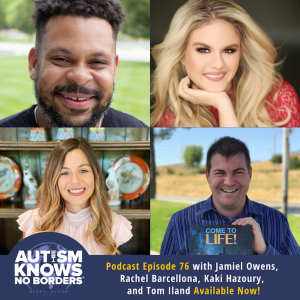
This week’s episode is a recording of one of our Global Autism Community exclusive events. The topic of this round table discussion is Safety in Public.
The diverse panelists include autism self-advocates Rachel Barcellona and Thomas Iland, autism father and host of The Ausome Show, Jamiel Owens, and our Global Autism Project partner from the Dominican Republic, Maricarmen (Kaki) Hazoury.
Other community members present at the event and part of the discussion are Jeff Snyder, David Sharif, Kia Burton, Karen Shapiro, and Ben Sharif.
We hadn’t originally planned to produce a podcast episode from this exclusive event, but we later thought it would be great to make this rich conversation available to our podcast listeners as well. We apologize for the inconsistent sound quality, but I assure you that the stories and perspectives shared by our guests are really worth listening to.
In today’s conversation, we discuss:
- Navigating around the community
- Autism-disclosure ID cards
- Interactions with strangers and law enforcement
- Setting boundaries on social media
Roundtable discussions like the one you’ll hear today are open exclusively for members of our online Global Autism Community. We select a different theme each month, and our moderators monitor posts daily to ensure that our online space remains safe and respectful.
If you’d like to attend and participate in any of our future events, you can sign up today at community.globalautismproject.org.
Also, just a heads up that next week we won’t be releasing a new episode in observance of Labor Day in the US. September is a good time of the year to reset and prioritize your own well-being, and our team will be taking the week off to do just that. I encourage you to find a moment for self-care during this weekend, whatever that means for you. For those of you living in the US, have a safe, happy, and restful holiday weekend. We’ll be back on our regular release schedule on Thursday, September 16th.
To learn more about the panelists in this discussion, please visit:
Read the rest of this entry »
Jul 29, 2021
Jul 29, 2021
1hr 2 min
Discover what’s possible when constraint unlocks opportunity.
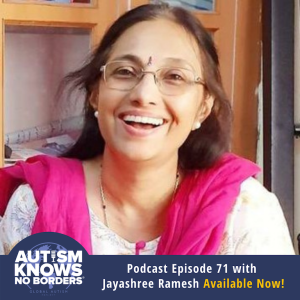
Jayashree Ramesh is the Founder and Director of Academy for Severe Handicaps and Autism, ASHA for short, in Bangalore, India. The Global Autism Project partnered with ASHA in 2018 and we’ve since sent three SkillCorps® teams to their center.
Founded by Molly Ola Pinney in 2003, the Global Autism Project provides sustainable clinical, administrative, and leadership training to autism centers seeking guidance. SkillCorps® is a volunteer opportunity for self-advocates and professionals to travel to our partner sites around the world and work directly with their local teachers and therapists.
We are currently accepting SkillCorps® applications for travel in 2022. Begin your journey today at globalautismproject.org/skillcorps. As a listener of our show, take advantage of the coupon code AUTISMPODCAST (no space and all caps) to waive the application fee.
In this conversation, Jayashree and I discuss:
- The varying perspectives of autism across India
- How Indian mothers and fathers accept autism differently
- What Jayashree loves about working with the autistic population
- Barriers she’s had to overcome when developing ASHA
- Leadership and encouraging teamwork among staff
- Effects of the pandemic on services at her center
- The partnership between the Global Autism Project and ASHA
- What she likes to share about Indian culture with our SkillCorps® teams
- Advice for other professionals interested in starting their own center
You’ll also hear us talk about Global Summit, which was our first annual conference held in Bali in 2019. It was a beautiful and inspiring week for all of our partners from around the world to connect and share ideas, stories, and resources. Global Summit was open for our SkillCorps® alumni to attend and receive continuing education credit as well. Watch our 2019 Global Summit video here.
To learn more about Jayashree and ASHA, please visit ashaforautism.com.
Read the rest of this entry »
Jul 22, 2021
Jul 22, 2021
40 min
Discover what’s possible when a mentor guides by example.
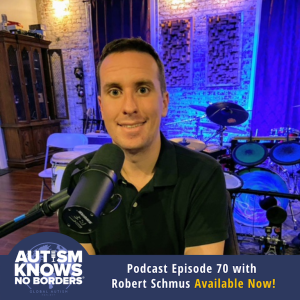
Robert Schmus is an autism self-advocate, a Licensed Clinical Social Worker in New Jersey, and a blogger for The Mighty. As a therapist, he currently provides individual and group sessions at a residential home for adolescents with autism and other co-occurring diagnoses.
In today’s conversation, we discuss:
- How Robert learned about his diagnosis
- His strengths related to autism
- Dealing with anxiety and covid uncertainty
- Dating on the spectrum
- His responsibilities as a social worker
- Ideas to help adolescents transition into adulthood and find a job
- Disclosing his diagnosis to employers
To learn more about Robert and his work, you can contact him via email at schmus898@gmail.com.
Read the rest of this entry »
Jun 17, 2021
Jun 17, 2021
59 min
Discover what’s possible when autism is not viewed as just a broken version of normal.
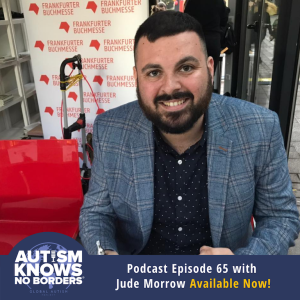
Jude Morrow. Based in Ireland, Jude is an autism self-advocate, TEDx speaker, and author. He is also the founder of Neurodiversity Training International, an autism mentoring, training, consultancy, and motivational platform. NTI works with non-profit and Fortune 500 companies using a strengths-based approach to change perceptions and attitudes. Jude’s first book, Why Does Daddy Always Look So Sad?, was published in 2020, and his second book, Loving Your Place on the Spectrum, is scheduled to be released in September of 2021.
In this conversation, we discuss:
- Autism awareness and acceptance in Ireland
- What it was like for Jude to grow up feeling that something was wrong with him
- Why society should move away from the medical model and embrace the neurodiversity movement
- The problem with labels of disorders and disabilities
- Consultation services offered at NTI
- Advice for anyone interested in being an ally of the neurodiversity movement
To learn more about Jude Morrow and his work, please visit https://neurodiversity-training.net/.
Read the rest of this entry »
Jun 3, 2021
Jun 3, 2021
56 min
Discover what’s possible when the student’s interests lead the team.
This week’s episode is a recording of a roundtable discussion during one of our Global Autism Community exclusive events. The topic is Individualized Education Programs, or IEPs.
The panelists include Brian Middleton, an autistic Board Certified Behavior Analyst; Colleen Dorsey, a special education teacher; and Michael Gilberg, an autistic special education and disability rights attorney.
Other community members present at the event and part of the discussion are Jeff Snyder, Mary Johnston, Ryan Litchfield, Jessie Sheahan, and Morgan Ferguson.
In today’s conversation, we discuss:
- The different roles on an IEP team
- How to reduce combativeness between professionals at IEP meetings
- Finding the sweet spot when writing goals and encouraging independence
- How to best support families throughout the IEP process
- Helpful accommodations suggested by self-advocates in the audience
Some acronyms mentioned in the conversation are IDEA, BCBA, and ABA. IDEA is the Individuals with Disabilities Education Act, which is an American piece of legislation that ensures eligible students with a disability are provided with Free Appropriate Public Education that is tailored to their individual needs. BCBA stands for Board Certified Behavior Analyst, and ABA is Applied Behavior Analysis.
These monthly roundtable discussions are open exclusively to members of our Global Autism Community. A new topic is selected based on each month’s theme. If you’d like to attend and participate in any of our future events, you can sign up today at community.globalautismproject.org.
To learn more about the panelists in this discussion, you can visit:
Brian Middleton: https://beardedbehaviorist.com/
Colleen Dorsey: @autismausome
Michael Gilberg: https://www.michaelgilbergesq.com/
Read the rest of this entry »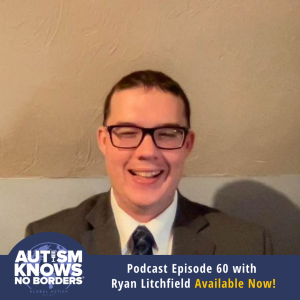
May 13, 2021
May 13, 2021
1hr 7 min
Discover what’s possible when support includes all ages.
Ryan Litchfield is an autism and disabilities self-advocate from Massachusetts. Diagnosed with autism at the age of two, Ryan underwent Applied Behavior Analysis therapy, occupational therapy, and speech therapy. Since his high school days, Ryan has been sharing his life journey with various agencies, communities, and organizations, and he is known by people around him to have a “fighting spirit.”
With a Bachelor’s degree in Human Services and Rehabilitation Studies and a Certificate in Aging Services, Ryan specializes in older adults with disabilities, guiding and supporting them to pursue their goals while promoting compassion, empathy, and kindness. Ryan has also had several blogs published in the Organization for Autism Research (OAR).
In today’s conversation, we discuss:
- The services Ryan received growing up
- His perspective on ABA therapy
- How autism affects his life
- Communication breakdowns in social situations
- The need for research about older adults
- How professionals can provide better support for their clients
To learn more about Ryan Litchfield and his work, please visit his website ryansvoice.blog.
Resources:
Read the rest of this entry »
Apr 29, 2021
Apr 29, 2021
34 min
Discover what’s possible when the audience takes the mic.
This week, we are celebrating the one-year anniversary of our podcast! It’s been an eye-opening journey that continues to leave us surprised, inspired, and moved.
We’ve learned so much from self-advocates sharing their experiences, family members talking about accepting their children’s diagnoses, and professionals discussing best practices in the field of autism services.
We’ve covered a wide range of topics, such as ableism, masking, the neurodiversity movement, intersectionality, disability rights, cultural humility, and international collaboration. A huge thank you to all of our guests for openly sharing your stories and educating us about your perspectives.
In today’s episode, we’ll be highlighting some of our dedicated listeners who have continuously supported this podcast over the last year. We want to give our community a chance to express what they’ve taken away from listening to the show. You’ll hear from Cameron Burrell, Griffen Wharbolt, Swathi Srinivas, Mary Johnston, Carrin Whitehurst, Nicole Ezcurra, Colleen Dorsey, and Liz Castillo.
I’d like to give a special shout-out to Liz, who had been working as a Global Autism Project team member until the beginning of this month. She just recently had her second child and is busy embarking on a new chapter, but she’ll always be a part of the team. Liz had been cultivating relationships with our community on social media since we launched the podcast. Not only did she ensure our guests’ messages reached our followers, she also encouraged our audience to listen with an open mind. Liz has played an integral role in reminding us to do with the autistic community and not for them. This compilation episode was actually her idea. She’s been a trusted colleague, a dear friend, and just such a beautiful human all around. We wish you all the best in your new endeavors, Liz!
Other team members who help make this podcast happen are Trang Tran and Linda Zheng. Trang, thank you for creating our beautiful visuals and audiograms week after week. Linda, thank you for managing guest relations and keeping us organized. And of course, this podcast wouldn’t even be possible without Molly believing in the idea from day one.
Episodes mentioned:
39. Why the World Needs All Kinds of Minds, with Dr. Temple Grandin
33. Bullying, Breakthroughs, and Basketball, with Anthony Ianni
22. Music Therapy and Autism in Australia, with Pamela Fisher
11. The Ability Beyond Disabilities, with Rachel Barcellona
49. Special Education and Disability Rights, with Michael Gilberg
43. Social Media and Intersectional Advocacy, with Tiffany Hammond
8. Finding Strength in Adversity, with Russell Lehmann
47. Neurodiversity in Popular Cartoon Characters, with Jeff Snyder
46. Autism in the Black American Community, with Maria Davis-Pierre
28. Occupational Therapy and Yoga for the Special Child, with Cheryl Albright
Read the rest of this entry »
Apr 22, 2021
Apr 22, 2021
1hr 6 min
Discover what’s possible when values inform the method.
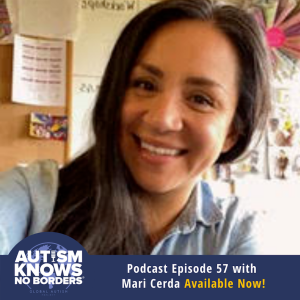
Mari Cerda is an Autistic Board Certified Behavior Analyst who consults with teachers and schools to provide professional development training on various neurodiversity-affirming topics. She is also completing her doctoral program at Texas Tech University.
As a Latina Mestiza, Mari is passionate about supporting displaced migrant families and their children with disabilities who enter the school system. She is the co-founder of The LEAP Institute, a non-profit whose mission is to increase equitable access for marginalized groups entering into the field of applied behavior analysis, or ABA. Through her Instagram account @the.blingual.bcba, Mari hopes to educate and mediate between the worlds of autism and ABA.
In this conversation, we discuss:
- Mari’s process of discovering and accepting her late diagnosis
- How autism is understood in Native and Latinx cultures
- The intersectionality of neurodiversity and race
- Her collectivist approach to providing services
- Ideas to bridge the divide between the Autistic community and ABA
Before we get into the interview, I’d like to clarify a couple of terms that came up in case you’re not familiar with them. The first one is “ableism,” which is discrimination or social prejudice against people with disabilities based on the belief that typical abilities are superior. Ableism can manifest as an attitude, stereotype, or offensive comment or behavior.
The second term is “extinction-based,” which refers to an ABA strategy used to reduce unwanted behaviors. For example, imagine a child is screaming because they want a piece of chocolate. We could give the child some chocolate so they would stop screaming, but that could actually have the opposite effect, leading the child to scream every time they want chocolate. In contrast, an extinction-based procedure would entail not giving the child any chocolate when they are screaming in order to reduce that behavior. Extinction-based procedures are controversial because they can be traumatic for learners. Side effects may include anger, frustration, and in some cases even depression.
I truly believe that, when implemented with a compassionate, client-centered approach, the science of ABA can help individuals reach goals that will enable them to live fulfilling lives. We have a lot of unlearning to do as a field, and we need guidance from autistic voices to ensure that our services are in line with neurodivergent values.
Are you a self-advocate willing to share your experiences and educate others? Are you a professional seeking to hear directly from autistic voices and improve your practice? Are you a family member hoping to support and empower your loved one? Join our Global Autism Community to connect and collaborate with people all over the world.
We already have a growing number of members with different roles related to autism getting to know each other and engaging in these important conversations.
You can sign up today at community.globalautismproject.org. Let’s work together to transform how the world relates to autism.
Read the rest of this entry »
Mar 25, 2021
Mar 25, 2021
1hr 51 sec
Discover what’s possible when collaboration journeys onward.
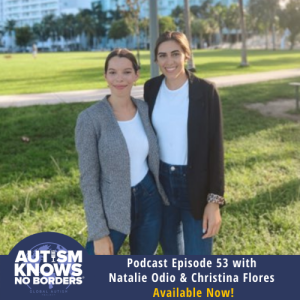
Today we’re featuring two members of our SkillCorps® Alumni community: Natalie Odio and Christina Flores.
Natalie is a Board Certified Behavior Analyst, or BCBA, and Christina is a Board Certified Assistant Behavior Analyst, or BCaBa. Both from Miami, Natalie and Christina host a podcast called MOnday Morning Coffee, where they aim to ease Monday mornings by discussing topics related to emotional support for other professionals in the field.
The Global Autism Project provides sustainable clinical, administrative, and leadership training to autism centers seeking guidance. SkillCorps® is an opportunity for self-advocates and professionals to travel to our partner sites around the world and work directly with their local teachers and therapists.
In today’s conversation, we discuss:
- Why Natalie and Christina are passionate about working with the autistic population
- The reasons for starting their podcast
- Personal and professional growth from doing SkillCorps®
- Cultural humility
- Fundraising for volunteer trips
- Lessons applied to coping with the pandemic
- Tips for future SkillCorps® travelers
To learn more about Natalie and Christina, please you can follow them on Instagram @onwardbehavior and check out their podcast MOnday Morning Coffee.
Read the rest of this entry »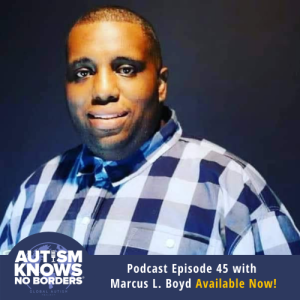
Jan 28, 2021
Jan 28, 2021
42 min
Discover what’s possible when you march to the beat of your own drum.
Marcus Boyd is an autism self-advocate, musician, professional DJ, and clothing line owner. As a music producer and composer, he has collaborated with artists such as Lil Wayne and Marques Houston. A short documentary about Marcus’ life, titled My First Word, was released in November of 2020.
In this conversation, Marcus opens up about the different layers of his childhood trauma, including growing up in abusive foster care homes, being admitted into several mental institutions, and not speaking until the age of 13. He talks about how he overcame his many obstacles, his autistic strengths that have helped his music career, and what made him decide to become an autism advocate.
It’s Marcus’ birthday this upcoming Sunday the 31st. So, from all of us at the Global Autism Project, happy birthday, Marcus!
For more information about Marcus Boyd, please visit autismactivistmarcusboyd.com.
Read the rest of this entry »